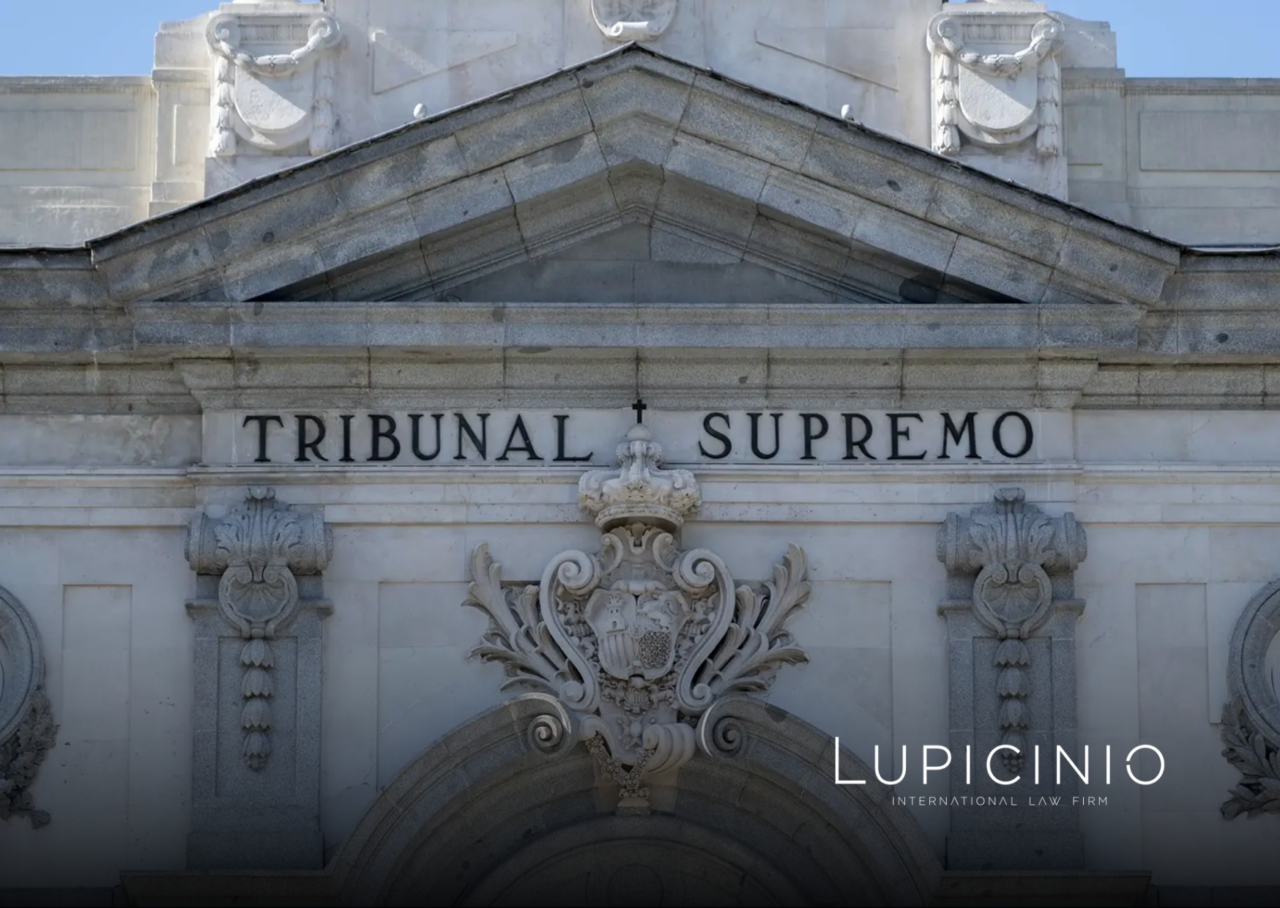
The recent Judgment No. 620/2026 of the Third Chamber of the Supreme Court, dated 19 May 2026, resolves one of the most significant jurisdictional disputes arising from the regulation of short-term rentals and the State’s attempt to establish a Single Lease Register linked to the Land Registry and the Register of Movable Property.
The dispute stems from the appeal lodged by the Valencian Regional Government against Royal Decree 1312/2024 of 23 December, a regulation through which the Government sought to implement the Single Lease Register procedure and create the so-called Ventanilla Única Digital de Arrendamientos or Single Digital Single Window for Rentals (VUDA), in accordance with Regulation (EU) 2024/1028 on short-term accommodation rental services offered through online platforms.
The legal issue raised was, in essence, to determine whether the State could rely on its powers regarding civil legislation, the organisation of public registers (Art. 149.1.8 of the Spanish Constitution), the regulation of basic conditions guaranteeing equality in the exercise of rights and the fulfilment of constitutional duties (Art. 149.1.1 of the Spanish Constitution), general planning of economic activity (Art. 149.1.13 of the Spanish Constitution) or exclusive competence over statistics for state purposes (Art. 149.1.31 of the Spanish Constitution) to impose a national system of compulsory registration of dwellings and short-term accommodation, or whether, on the contrary, such regulation encroached upon the autonomous regions’ powers in the areas of tourism and housing. It should be noted that on 18 December 2024, the Council of State issued an opinion against the State’s competence to enact the proposed regulation in all matters relating to the single register of tenancies; given the quality of such opinions, they are often accorded significant weight in subsequent judgments, as was the case here.
The Valencian Regional Government argued that the European Regulation did not require the creation of a new state register when regional registers of tourist accommodation already existed, and that the Royal Decree created a duplication of procedures and administrative burdens (maintaining the regional registers of tourist accommodation alongside the new state register) incompatible both with European legislation (Regulation (EU) 2024/1028 in relation to Law 20/2013 on Market Unity) and the constitutional distribution of powers.
In response, both the State Legal Service and the Association of Registrars argued that the system designed was of a civil-law nature and not a tourism-related one, that what was being registered were the accommodation units and not the economic activity carried out within them (distinguishing between short-term tourist stays and non-tourist stays such as for work, study, medical reasons, etc. as provided for in Article 2 of the Urban Leases Act – in conjunction with Article 5 –), and that, ultimately, the regulation was covered by the State’s competence regarding the organisation of public registers and by the need to guarantee a uniform framework for the entire national territory.
The judgment begins by dismissing the alleged procedural irregularity invoked by the defendants: the Court considers that the prior request to amend the legislation to bring it into line with the European Regulation and the constitutional system of division of powers subsequently allowed for a claim for its judicial annulment to be brought, without there being any substantial alteration to the claim made.
However, the core of the ruling lies in the analysis of jurisdiction. The Supreme Court concludes that the State lacks sufficient legal basis to impose the state procedure of the Single Lease Register. In the Chamber’s view, the prior existence of regional registers linked to tourism and the very structure of the European Regulation preclude the creation of a new mandatory national procedure superimposed on those already in place. The judgment attaches particular importance to the provision of Regulation (EU) 2024/1028, according to which a single accommodation unit must not be subject to more than one registration procedure.
The Chamber considers that the grounds of competence invoked by the State do not justify the creation of this mandatory national register:
- Neither the competence regarding the organisation of registers and public instruments (on the understanding that the register of short-term tenancies is, as the Council of State pointed out, an administrative register, leading to the conclusion that all other administrative registers are linked to the substantive competence exercised for the organisation of the corresponding administrative register (SSTC 197/1996, of 28 November, legal ground 12; STC 103/1999, of 3 June, para. 3; STC 134/2006, of 27 April, para. 8),
- Nor does general economic planning (recognising the necessary state coordination in matters of short-term tenancies, but without this justifying the assumption of powers, considering that ‘Article 149.1.13 of the Spanish Constitution requires a restrictive interpretation, since an excessively broad one could constrain and even render meaningless the legitimate sectoral powers of the autonomous communities (SSTC 29/1986, para. 4, and 141/2014, para. 5),
- Nor that relating to the basic conditions of equality (on the grounds that the legislation under review does not seek to establish these basic conditions in relation to citizens’ housing, but rather a detailed regulation on registration in a national register which aims to provide information to public administrations enabling them to implement their public policies),
- Nor the state statistics (as they bear no direct relation to those provisions).
Furthermore, it emphasises that European legislation indicates to Member States what they must regulate in a specific area, in order to harmonise it at European level, but not how to regulate it, without ever interfering in the internal distribution of competences within Member States.
However, the judgment draws a clear distinction between the registration procedure and the mechanisms for coordination and information exchange provided for in the same legislation: thus, it considers the creation of the Digital Single Window for Rentals to be entirely legitimate, as well as the obligations on digital platforms to transmit data and the provisions for the statistical processing of such information, on the understanding that these measures do indeed fulfil state functions of coordination and compliance with the requirements arising from European Union law.
As a result of this reasoning, the Court partially upholds the appeal and annuls all provisions of the Royal Decree relating to the Single Lease Register procedure and the obligation to obtain a registration number through entry in the Land Registry or the Register of Movable Property in order to advertise short-term accommodation on digital platforms. Conversely, it upholds the provisions relating to the Digital Single Window and the exchange of information.
This ruling is of considerable practical significance as it redefines the scope of state intervention in a sector that is particularly sensitive from a jurisdictional perspective: the Supreme Court acknowledges the need for national mechanisms for coordination and data exchange, but rejects the notion that this purpose justifies supplanting or duplicating the registration systems already in place at regional level (citing, for example, Andalusia, Castile and León, the Basque Country, Aragon and Asturias) established in accordance with the powers assumed by the respective Autonomous Communities.
Co-autores: Ángel Lavín Martínez y Juan Gonzalo Franch Quiralte
******
More information:
Lupicinio International Law Firm
C/ Villanueva 29
28001 Madrid
P: +34 91 436 00 90