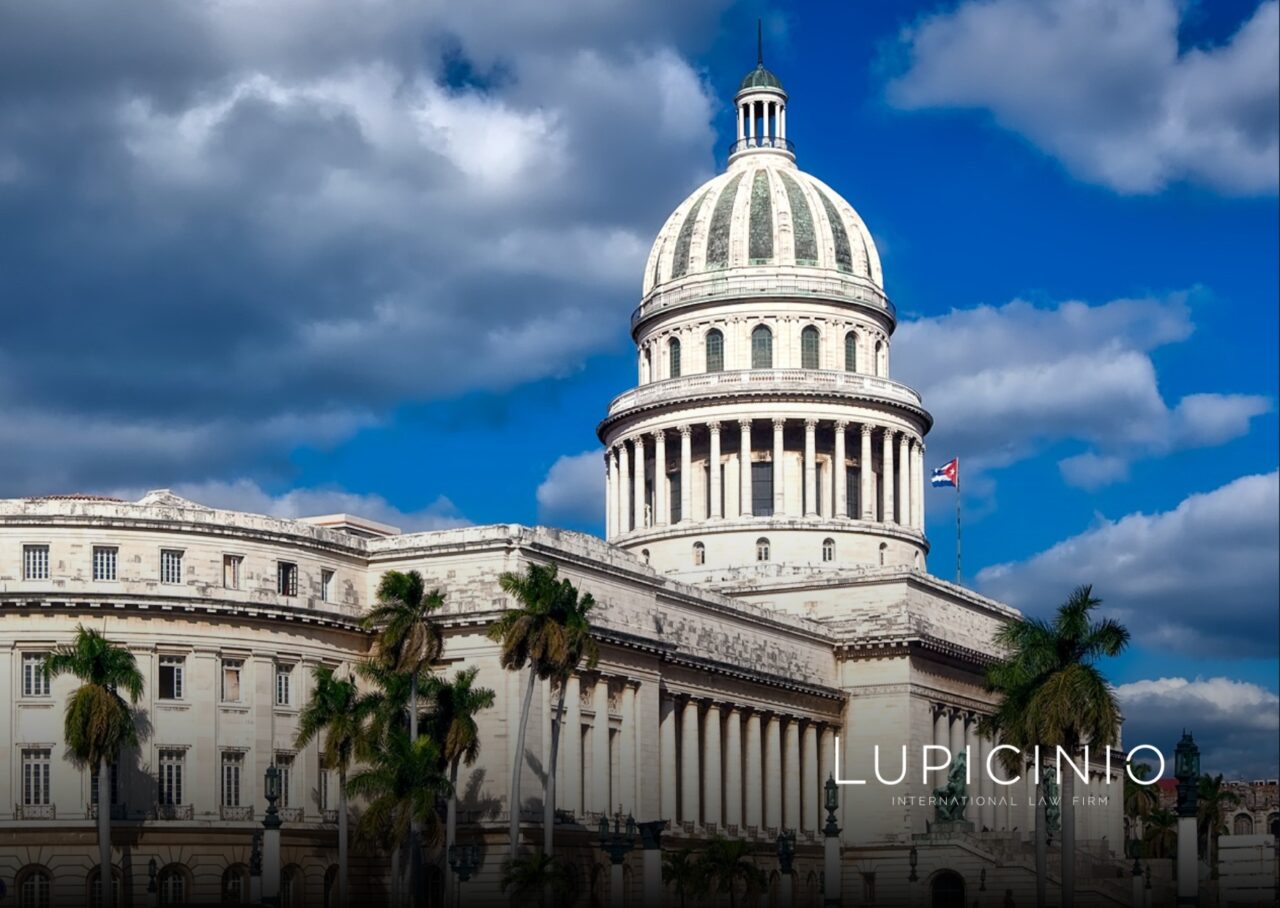
On 29 January 2026, the United States Administration adopted a new executive order that substantially intensifies economic pressure on Cuba by introducing a tariff mechanism directed at third countries that sell or supply oil to the island. The initiative is structured as a trade-policy instrument grounded in national-security considerations and forms part of the broader strategy of economic containment pursued by the United States against Cuba in recent years.
The measure, adopted pursuant to the International Emergency Economic Powers Act (IEEPA) and the National Emergencies Act (NEA), formally declares the existence of a “national emergency” linked to the actions of the Cuban Government, which the United States associates with what it terms “hostile countries, transnational terrorist groups, and malign actors”, including the Government of the Russian Federation, the People’s Republic of China, the Government of Iran, Hamas, and Hezbollah. In the text, the White House argues that such actions constitute an “unusual and extraordinary” threat to national security and foreign policy, thereby justifying the activation of extraordinary presidential powers in commercial and economic matters.
According to the U.S. Executive, the principal purpose of the measure is to restrict Cuba’s access to oil and to revenues derived from international energy trade, on the grounds that the regime maintains strategic alliances with the aforementioned countries and actors and supports activities aimed at regional destabilization, in addition to engaging in systematic human-rights violations.
Table of Contents
Political and Diplomatic Context
The measure is adopted in a climate of increasing friction between the United States and Cuba. Following a period of limited engagement between 2021 and 2023, the current Administration has opted to harden its stance, relying on arguments related to national security, the projection of external powers in the Western Hemisphere, and the progressive deterioration of fundamental rights on the island.
From an international perspective, the initiative threatens to strain relations with U.S. trading partners in both Europe and Latin America, particularly those countries whose energy companies maintain supply, transportation, or refining agreements with Cuba, such as Mexico.
At the same time, the decision is taken against a backdrop of an especially delicate economic and social situation in Cuba, marked by persistent electricity outages and sustained inflationary pressures. The country’s heavy dependence on imported fuels constitutes a structural factor for the stability of its energy system, which gives any additional restriction on supplies a potentially significant impact.
Substantive Content and Regulatory Scope of the Measure
From an operational standpoint, the executive order establishes a tiered system for identifying and responding to countries that supply oil to Cuba.
The Secretary of Commerce is empowered, in consultation with the Secretary of State and other federal agencies, to determine whether a foreign State participates, either directly or indirectly, in such operations, including cases in which supply is channelled through intermediaries or third countries.
Once such circumstances are confirmed, the Secretary of the Treasury, the Secretary of Commerce, the Secretary of Homeland Security, and the United States Trade Representative are tasked with recommending to the President the imposition of an additional ad valorem tariff on products originating in the affected country that are imported into U.S. territory. The final decision, as well as the level of the tariff surcharge, is reserved to the President.
The text also grants broad discretion to modify, intensify, or suspend the measures in light of the reaction of the States concerned, possible trade retaliation, or significant changes in the conduct of the Cuban Government.
It further provides for a system of ongoing monitoring and periodic reporting to Congress, together with a final section setting out definitions of key concepts such as “oil,” “indirectly,” “Government of Cuba,” or “entities controlled by it.” Of particular relevance is the notion of “indirectly,” defined as the “selling to or otherwise providing oil to Cuba through intermediaries or third countries, with knowledge that such oil may be provided to Cuba, as determined by the Secretary of Commerce.” This broad and flexible formulation leaves a significant margin of administrative discretion and raises questions regarding the practical reach of the measure and its extraterritorial application.
Legal Perspective: Extraterritoriality
From a legal standpoint, the executive order represents a further step in the progressive convergence between traditional economic-sanctions instruments and trade-policy measures. Although it is not formally structured as a programme of the Office of Foreign Assets Control (OFAC), its design and practical effects resemble secondary-sanctions regimes insofar as they shift regulatory pressure onto economic operators from third States with exposure to the U.S. market.
This approach poses several significant challenges for international companies. First, the potential for regulatory conflict arising from the extraterritorial reach of U.S. measures. Second, the increasing blurring of the line between financial sanctions and punitive tariffs adopted on national-security grounds, which broadens the range of regulatory tools available to the United States. Finally, the order substantially raises compliance requirements, forcing operators to reinforce due-diligence systems, supply-chain traceability, and the inclusion of specific contractual clauses.
For companies engaged in cross-border activity and with access to the U.S. market, the new scenario calls for a comprehensive reassessment of risk-mapping exercises and of internal compliance programmes in the areas of export controls and foreign trade.
Conclusion
The new executive order consolidates the United States’ strategy of multidimensional economic pressure on the Republic of Cuba, combining instruments of energy policy, trade policy, and national security. Its practical implementation, subsequent regulatory development, and the first concrete decisions on the imposition of tariffs will be decisive in gauging its real impact on regional supply chains and on the legal position of foreign companies in the face of the expanding extraterritorial projection of U.S. trade law.
Authors:
- Fátima Rodríguez: Partner and Head of the Criminal Law and Regulatory Compliance departments
- José Luis Iriarte: Professor of Private International Law at the Universidad Pública de Navarra
- Rocío Gras: Junior Lawyer
******
More information:
Lupicinio International Law Firm
C/ Villanueva 29
28001 Madrid
P: +34 91 436 00 90