Experience
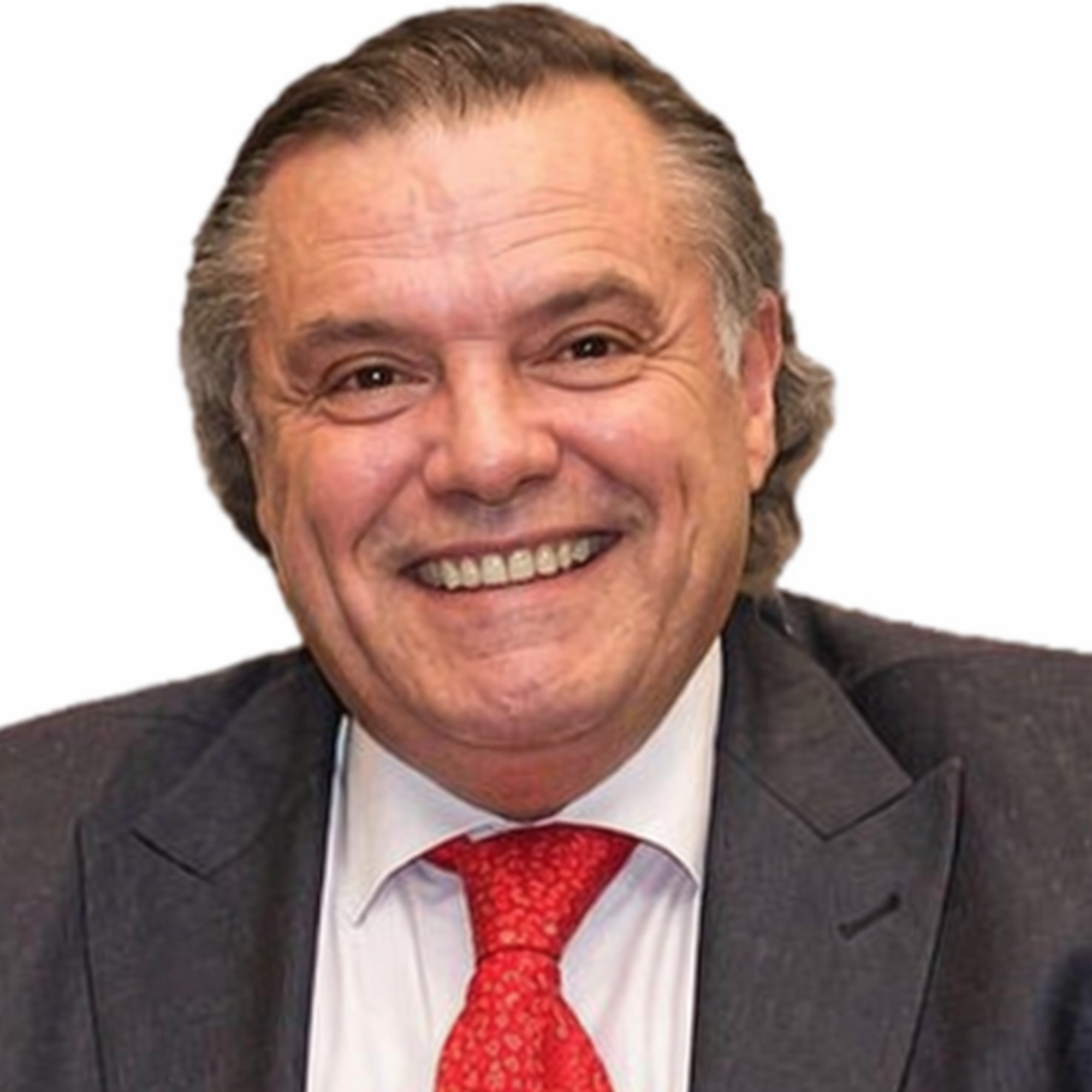
Juan Carlos Ferré Olivé is a member of the Lupicinio Cluster and is widely recognised as one of the leading academic and scientific authorities in Criminal Law within the Spanish-speaking world. He has devoted more than four decades to university teaching, research and scholarly work in the fields of economic criminal law, compliance, corporate crime and criminal policy.
He served as Associate Professor of Criminal Law at the University of Salamanca between 1988 and 1995 and has held the Chair of Criminal Law at the University of Huelva since 1996. Throughout his academic career, he has maintained an extensive teaching and research activity, participating in international academic projects and training generations of lawyers, researchers and specialists in Criminal Law.
He is the author of more than 160 scholarly publications, including books, monographs, book chapters and academic articles, covering a broad range of subjects such as economic criminal law, tax offences, accounting crimes, money laundering and terrorist financing, criminal authorship and participation, punishability, juvenile criminal law, intellectual property offences, the expansion of criminal law, plea bargaining and criminal compliance systems.
His work has been published in numerous countries across Europe and the Americas, including Germany, Argentina, Bolivia, Brazil, Cape Verde, China, Colombia, Costa Rica, Ecuador, El Salvador, Spain, Italy, Mexico, Peru, Poland, Portugal, Puerto Rico, the Dominican Republic, Russia, Serbia, Ukraine, Uruguay and Venezuela. He has published in Spanish, German, Portuguese, English, Italian and Ukrainian.
Between 2009 and 2019, he served as President of the Spanish Group of the International Association of Penal Law (AIDP), the oldest and most prestigious scientific institution in the field of Criminal Law worldwide. He is also the founder and Editor-in-Chief of Revista Penal, a leading criminal law journal published by Tirant lo Blanch since 1998, and founder and Editor-in-Chief of Revista Penal México, published by the National Institute of Criminal Sciences (INACIPE), both of which have become prominent international forums for academic debate and reflection on criminal law.
His professional experience also extends to university and institutional management, having held senior positions such as Dean of the Faculty of Law at the University of Huelva, Managing Director of the Foundation of the University of Salamanca, and Executive Vice-President of the Foundation of the University of Huelva.
Achievements and Recognition
Professor Ferré Olivé’s academic and scientific career has received extensive international recognition through numerous honours and distinctions. He has been awarded the degree of Doctor Honoris Causa by the University of Lomas de Zamora (Argentina), the Catholic University of Colombia, Continental University of Mexico, Mackenzie Presbyterian University of Brazil and Ricardo Palma University of Peru.
He has also been appointed Honorary Professor by several prestigious Latin American universities, including the Universities of Guanajuato, San Martín de Porres, Buenos Aires, Abierta Interamericana and Federico Villarreal. In addition, he has served as Visiting Professor at Externado University of Colombia and has been recognised as an honorary member by various academic and professional institutions in Ecuador, Bolivia and Peru.
Among the most notable distinctions he has received are the Venera Justitia et Jus Award granted by the College of Professors of Criminal Law and Criminal Procedure of the National Autonomous University of Mexico, the “Ricardo Cayetano Núñez” Academic Excellence Award granted by the Peruvian-Argentine Institute of Criminal Law, and the 2018 Book Award presented by the Inter-American Bar Association (Washington, D.C.) for his work Treatise on Offences against the Public Treasury and Social Security System.
He has also undertaken research fellowships at prestigious international institutions, including the Institut für Kriminologie und Wirtschaftsstrafrecht at the University of Freiburg (Germany) and the University of Rome Tor Vergata (Italy).
Languages
Spanish, English, Portuguese and German.